
Why Class A/B Amplifiers Still Rule the World
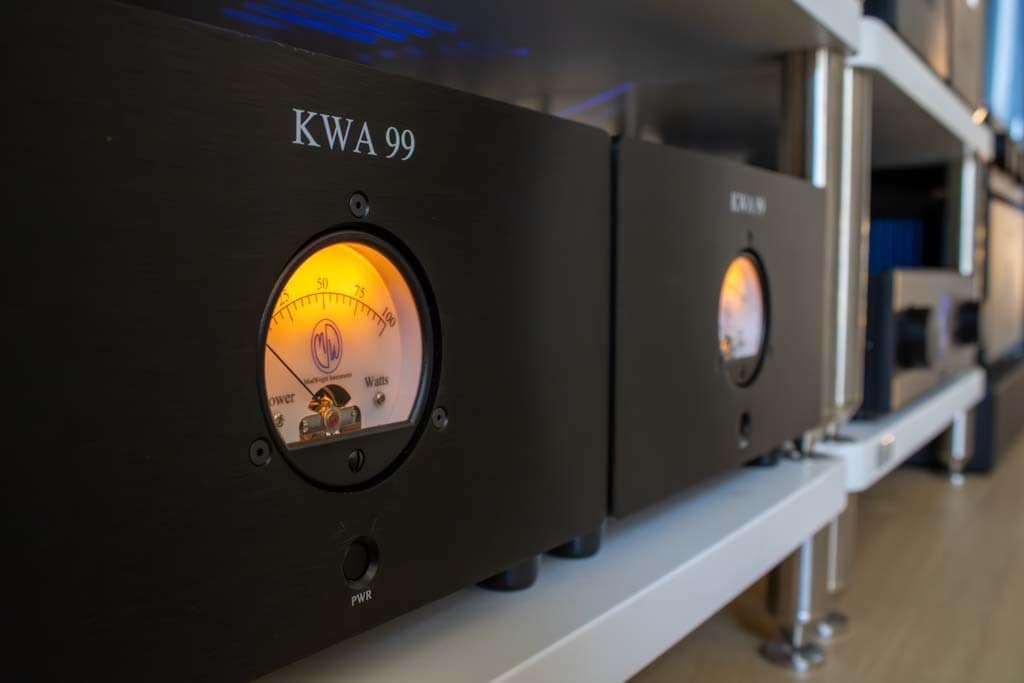
Amplifier designs have evolved dramatically over the years, from tubes to solid state and now Class D.
Modern Class D designs offer undeniable advantages. They are efficient, compact, run cool, and can deliver tremendous power from relatively small and affordable enclosures.
And yet, despite these advances, many experienced listeners still return to well-designed Class A/B amplifiers for one simple reason:
musical realism.
Amplifiers Are More Than Specifications
Many manufacturers market products primarily through measurements and specifications. While technical performance certainly matters, perfect measurements alone do not always translate into emotional connection.
The best amplifier designs possess something more difficult to quantify:
ease, flow, dimensionality, harmonic integrity, and dynamic realism.
Music should feel natural and unconstrained — not merely accurate on paper.
Why Class A/B Still Matters
Well-executed Class A/B designs allow for continuous analog operation, excellent output-device linearity, and exceptional current delivery.
A truly refined A/B amplifier maintains composure under complex musical passages and difficult loudspeaker loads. It preserves microdynamics, harmonic decay, and spatial realism. It does this all in a way that sounds organic and emotionally convincing.
Music is not a steady-state test signal.
It is dynamic, layered, and constantly changing.
The finest amplifier designs reproduce those shifts effortlessly.
The Importance of Power Supply Design
At the heart of any exceptional Class A/B amplifier is a robust power supply.
This is fundamentally about energy storage and delivery, determined by both transformer capacity and capacitive reserve.
The transformer must be capable of supplying instantaneous current on demand, while large-scale energy storage allows the amplifier to remain stable and controlled during rapid musical transients and dynamic swings.
The result is authority, stability, control, and ease under load.
In many ways, an amplifier’s power supply determines how effortlessly music flows.
Why Many Audiophiles Still Prefer Class A/B
There is a sense of body, weight, dimensionality, and harmonic completeness that many listeners continue to associate with great Class A/B designs.
The presentation feels relaxed rather than forced.
Engaging rather than fatiguing.
This encourages long-term listening sessions where attention shifts away from analyzing sound and back toward simply experiencing music.
Music becomes an emotional escape rather than a technical exercise.
The Goal Was Never Technology — It Was Music
At ModWright, we have always approached amplifier design from a different perspective.
The goal was never to chase technology for its own sake, but to pursue the shortest and most natural path to signal integrity.
This philosophy values preservation over correction.
Simplicity over unnecessary complexity.
At the heart of every ModWright solid-state amplifier is the Solid State Music Stage (SSMS), originally developed by Alan Kimmel.
It uses transformer coupling, a single-stage and zero global negative feedback. The design focuses on maintaining signal integrity from the very beginning rather than correcting problems afterward.
This philosophy is further refined throughout our designs through the complementary strengths of tube and solid-state technologies.
The goal has always remained the same:
to bring listeners closer to the emotional heart of music.
Why Class A/B Continues to Endure
Technology will continue to evolve, and innovation will continue to push amplifier design forward.
But well-designed Class A/B amplification remains deeply relevant. This is because it continues to reproduce music in ways many listeners find emotionally convincing, natural, and deeply satisfying.
The goal was never simply to chase a topology or a technology.
The goal has always been to find the shortest path between the listener and the music.
ModWright Instruments
Elegance.Simplicity.Truth
More Truth
Readers interested in learning more about amplifier design can also explore our other articles.
MOSFET vs BJT amplifier output stages
ModBlog: Tube vs Solid-State Power
When the System Disappears and There Is Only Music
The Audio Journey — And What We’re Really Chasing
Tube – Solid-State Hybrid System Design: The ModWright Way