
The Part We Never Talked About
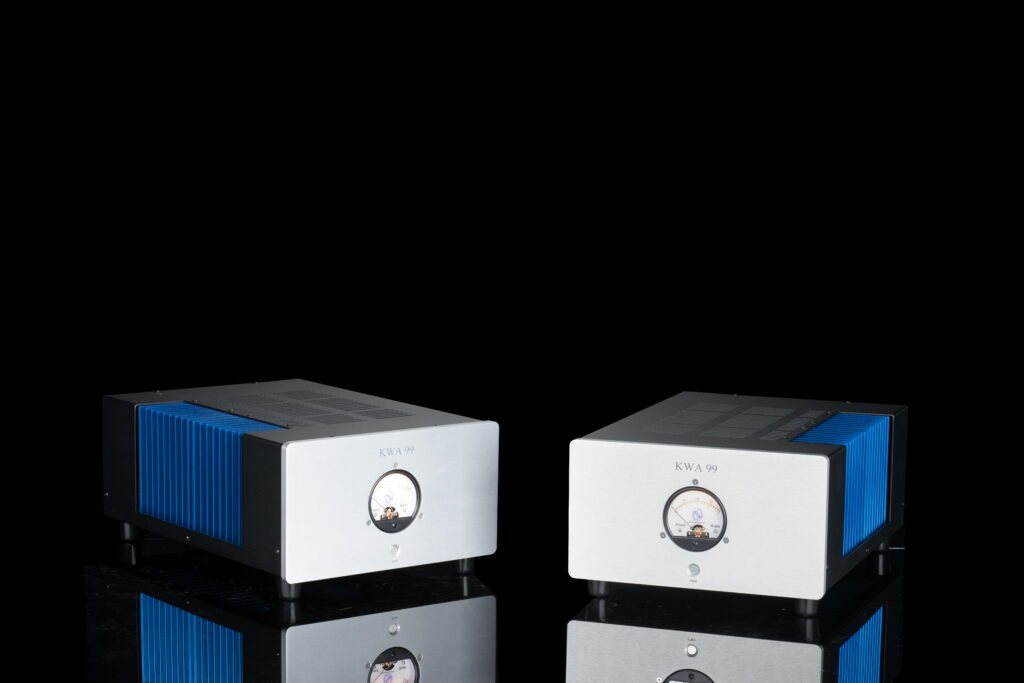
Most people don’t start their audio journey thinking about circuit topology.
They think about sound.
A moment.
A system that pulled them in.
A feeling that stayed with them long after the music stopped.
And over time, the system evolves.
A better source.
A more refined preamp.
Speakers that reveal more than before.
And yet… at a certain point, something still isn’t fully there.
Nothing is obviously wrong.
But everything isn’t completely at ease.
The system doesn’t quite disappear.
This is where things get harder to define.
Because what’s missing usually isn’t a “feature.”
It isn’t more detail.
It isn’t even more power.
It’s the way everything holds together.
The sense of effortlessness.
The absence of strain.
The feeling that nothing is being pushed or held back.
And this is the point where most systems stop improving in obvious ways…
and start revealing the limits of how they are built.
What we realized—over time—is that this isn’t solved at the end of the circuit.
It has to be solved at the beginning.
Not corrected later with feedback.
Not managed after the fact.
But designed so that the problems never take hold in the first place.
This is where our amplifier design is different.
For nearly 20 years, every ModWright solid-state amplifier has been built around a circuit originally developed by Alan Kimmel.
It’s a design we adopted early on—and continued to refine—because it aligned with how we believe music should be reproduced.
We now refer to it as the Solid State Music Stage (SSMS).
At its core, it’s a simpler, more direct approach.
A single-stage signal path.
Transformer-coupled input.
No global negative feedback.
Instead of building a complex multi-stage circuit and correcting it afterward,
the SSMS approach focuses on preserving the integrity of the signal from the very beginning.
The goal is straightforward:
minimize the conditions that create distortion, rather than correcting it later.
What does that mean in listening?
You’re hearing real music. You are immediately transported
to the place where the music was recorded.
It’s something you notice over time.
Music flows more naturally.
Dynamics feel less forced.
The system breathes.
There’s a sense that the amplifier isn’t working against the music…
or against itself.
And when everything else in the system is already right,
this is often the point where it finally comes together.
Why we’re talking about it now
For years, we focused on the result—not the method.
But as more people spend time with our amplifiers,
this aspect of the design keeps coming up.
Not as a specification—
but as an experience.
And we’ve come to realize that what we took for granted
is actually central to what people are hearing.
It was never about doing something different.
It was about doing it in a way that didn’t need to be fixed later.
And in the end, that may be the difference that matters most.
If you’ve spent time refining a system and feel like something is still holding it back…
This is often where the answer lies.
ModWright Instruments
Elegance.Simplicity.Truth
More Truth
Readers interested in learning more about amplifier design can also explore our other articles.
MOSFET vs BJT amplifier output stages
ModBlog: Tube vs Solid-State Power
When the System Disappears and There Is Only Music
The Audio Journey — And What We’re Really Chasing
Tube – Solid-State Hybrid System Design: The ModWright Way